
As a savvy entrepreneur, how do you decide which entity type is right for your business? Some business owners stick with what’s familiar, but they may be missing out on advantages that could boost their bottom line. Our rule of thumb is simple: aim for the lowest tax bill. This is easier said than done. Countless online articles and business influencers will offer their opinions about C corporations vs. S corporations vs. LLCs. But quick guides and A.I. summaries tend to skip over the nuances. The truth is that the most tax-advantaged entity type will depend on your specific business needs.
The bad news is there is no default correct answer. The good news is that a Certified Tax Planner can walk you through the pros and cons of each option as it relates to your unique business.
Is an S Corporation a Tax Planning Silver Bullet?
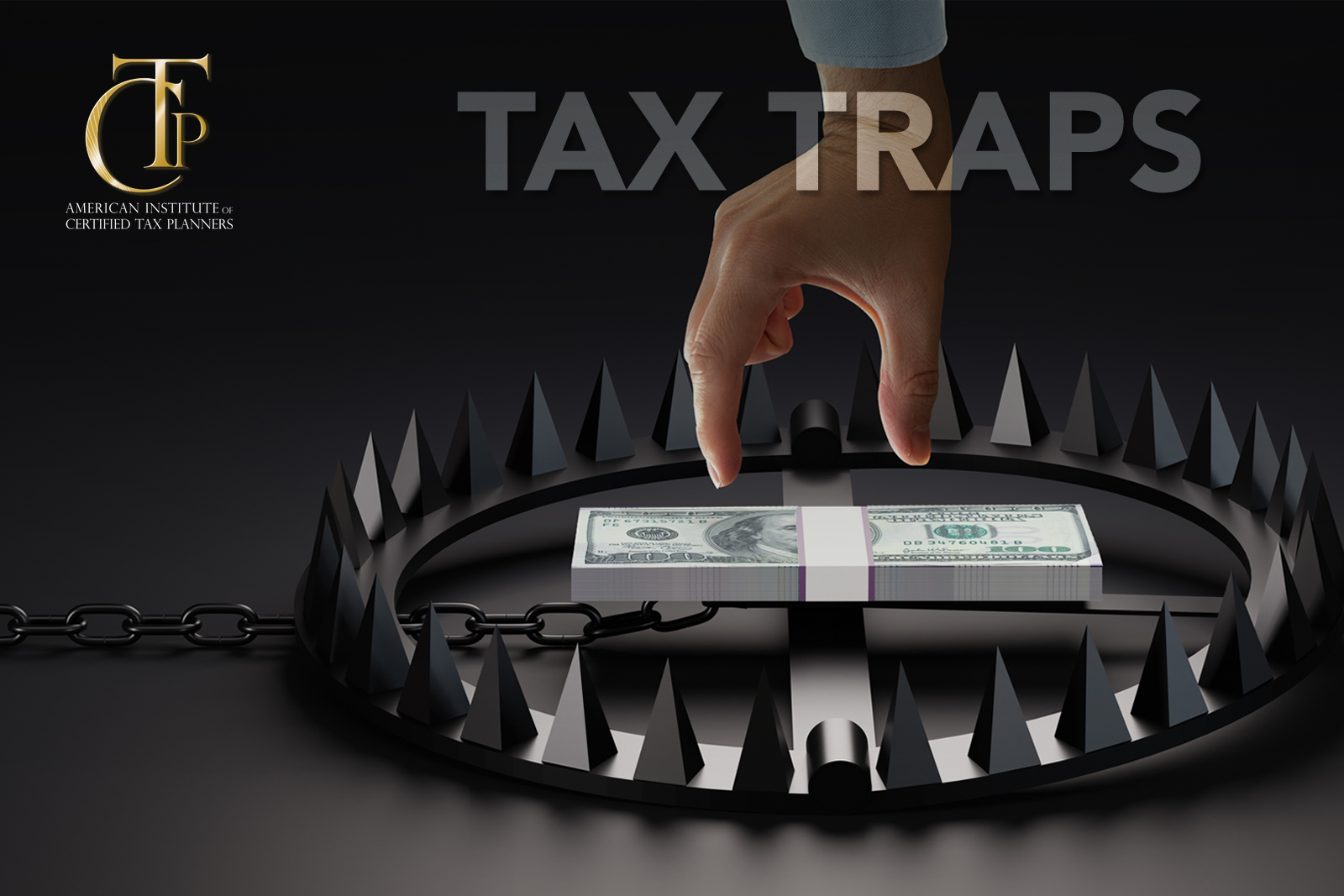
The short answer is “no.” Like with every entity type, S corporations have their upsides and their downsides. The key is to go into your tax planning conversation with an open mind. If you already made an S election, you likely had good reasons. No corporate income tax, lower self-employment taxes, and the ability to pass on tax deductions and credits to shareholders? All attractive benefits of an S corporation. But S corporations also have hidden tax traps, some of which can come from a C corporation switching to an S corporation.
These tax traps can be avoidable if you know what to look for—which is exactly what Certified Tax Planners specialize in handling.
Watch Out for These S Corp Tax Traps
If you are an S corporation owner or aspiring S corporation owner, educate yourself on both the pros and cons of your entity type. To make sure hidden tax consequences don’t take you by surprise, ask yourself these questions:
1. Has Your S Corp Sold Any Business Assets?
An S corporation is a pass-through entity, which means that suddenly any gains and losses from the business are passed on to the shareholder. So if your business makes a profit from selling any of its property, the shareholders are then responsible for paying taxes on that profit. The tricky part is that taxes owed are affected by things like the timing of the sale and whether the business took depreciation deductions. If you made a sale or are planning a sale, be sure to discuss these details with your tax planner.
2. Are You Planning to Deduct Business Losses Against Non-Business Income?
S corporation fans may like the fact that the business passes its losses onto shareholders so that they can use them for personal deductions. However, there is a limit to this perk called the “excess business loss limitation,” and it’s dependent on your annual income. If you are over the income threshold, this can dampen your plans to leverage business losses to lower your personal tax bill. When this is the case, work with your tax planner to determine if it’s possible to shift income or shift those losses to another tax year when you can really maximize that deduction.
3. Does your business have a significant amount of passive income? When you switch from a C corporation to an S corporation, these two things can get you in trouble: holding accumulated earnings and profits and having more than 25% of your earnings from passive income. If your business checks off both boxes, you can get hit with corporate income tax. What’s more, your S election may be deemed invalid. If this could be you, consult a tax professional to help you understand the rules around excess passive income.
Know the Rules Before You Make the S Election
Establishing an S corporation is not always a slam dunk tax planning move. The hidden tax traps may be easily avoidable for some businesses and difficult to circumvent for others. Whether you currently own an S corporation or you are considering making an S election, don’t take another step without enlisting a tax planner to conduct a full tax analysis. That one decision can be the difference between a hefty tax bill and thousands in tax savings.
Tax Planning is a Team Sport
Navigating the complexities of tax law can be intimidating, especially for small business owners with countless tasks on their plates. Don’t go through another tax season alone. At the American Institute of Certified Tax Planners, we train tax professionals to think beyond mere compliance and return preparation. Our tax planners know how to sift through the details of your financial situation to come up with a tax plan that is tailored to you—while also thinking about how to maximize savings in the years to come.
Recruit a heavy hitter to join your team today by reaching out to a Certified Tax Planner.